
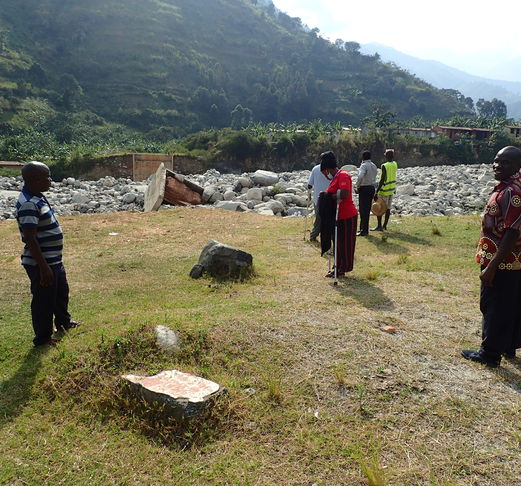
Persons with disabilities are particularly vulnerable to the severe consequences of climate change that we are now witnessing across the world, especially in countries that have contributed the least to greenhouse gas emissions. They are also affected more severely by disasters, crises, and conflicts. NAD’s partner organizations work to strengthen the resilience and coping capacity of persons with disabilities in the face of climate change and disasters. Persons with disabilities must be included in all stages of this work - from prevention and adaptation to response and reconstruction - so that their needs and knowledge are taken into account and put to use.
Currently, NAD works with inclusive climate change adaptation and disaster risk reduction in Uganda and Zambia.
Climate change as part of the disaster landscape
In many countries, persons with disabilities and their families already face difficult circumstances, including low income, limited access to education, health services that do not meet their needs, and generally insufficient participation and inclusion in society at local and national levels. When additional challenges arise in local communities or across wider areas, persons with disabilities are affected more than others because their resources are placed under even greater strain.
Persons with disabilities are often not involved in the planning and implementation of disaster response and humanitarian efforts. Emergency preparedness plans frequently fail to account for different types of disabilities in relation to evacuation, safe shelter, and similar needs. Persons with disabilities affected by disasters and crises are also far more exposed to abuse and violence, especially girls and women. In chaotic situations, losing assistive devices, family members, or medication can have fatal consequences. BILDE
How NAD’s partner organizations work
In line with CRPD Article 11 – Situations of risk and humanitarian emergencies – NAD’s international work has supported inclusive disaster risk reduction since 2015. What began with a focus on severe natural disasters such as floods, landslides, and drought has evolved into a broader understanding of what can lead to disastrous consequences, including slower-onset climate change. Such changes may include rainfall arriving at unexpected times and in unusual amounts, creating difficulties for smallholder farmers and food production. This can also affect access to clean water and electricity.
Organizations of persons with disabilities are strong advocates for the inclusion of persons with disabilities in all phases of emergency preparedness and climate adaptation. These organizations work with authorities and other relevant actors from the community level to the national level. Through training and access to relevant local services, persons with disabilities and their families are better equipped to manage both the long-term consequences of climate change and sudden disasters. At the same time, advocacy to achieve inclusive national frameworks and measures for climate adaptation and disaster risk reduction will continue.
Other partnerships
In addition to our main partners, which are organizations of persons with disabilities, NAD has established a long-term partnership with the Norwegian University of Life Sciences (NMBU). NMBU offers master’s level courses in Just Climate Transition, with a particular focus on the rights and contributions of persons with disabilities. Students from Norway, Uganda, and Zambia take part, and fieldwork and data collection are organized in collaboration between universities and organizations of persons with disabilities in the participating countries.
